
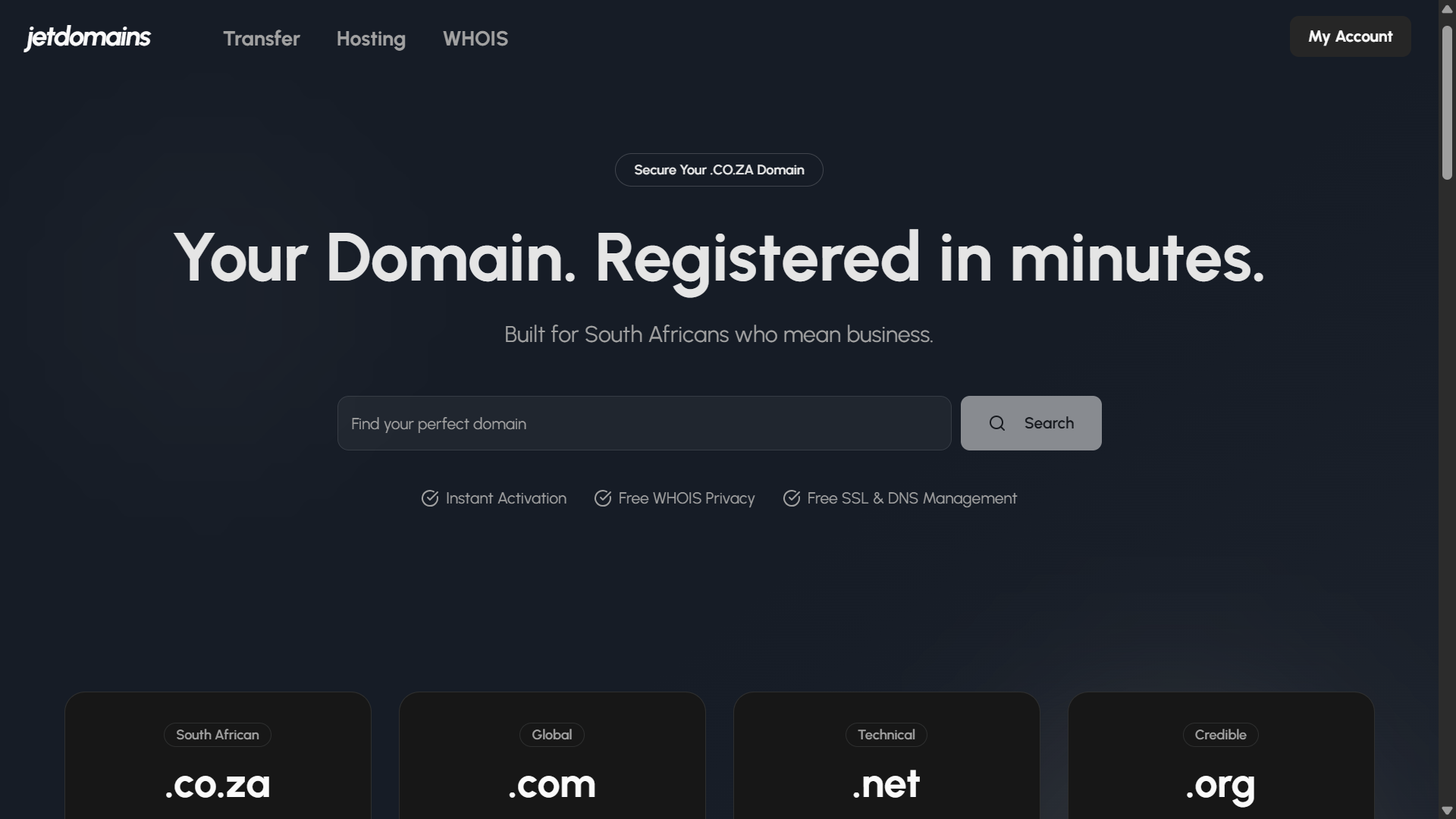
A domain registrar and hosting provider for South Africa. I started it because getting a South African business online was harder than it should have been and it has evolved into something changes the way we manage domains.
It began as a straightforward business: sell domains, sell hosting, make it simple. It’s turned into something closer to a systems problem. Pricing that has to stay accurate as reseller costs shift, alerts that have to fire before a renewal is missed, billing that has to hold up when it’s someone else’s business depending on it.
The problem
Most South African businesses either have no domain at all, or they have one nobody’s paying attention to DNS set up years ago by some one who’s since moved on, a renewal email going to an inbox no one checks, no idea what SSL status even means until the padlock disappears.
That’s not a design problem. It’s an invisibility problem. The infrastructure exists, but nobody can see the state of it until something breaks.
What I built
- Registrar + hosting, in one place, with pricing in ZAR instead of a US-centric platform charging in dollars
- External domain connection — you can bring in a domain registered anywhere else and get expiry, DNS, and SSL visibility on it without a forced migration. Most tools make you move everything to see anything. This doesn’t.
- Alert infrastructure for expiry and SSL, built after watching two accounts nearly lose a domain because nobody was watching
- An org and permissions system — personal accounts for individuals, full role-based access for agencies managing things on behalf of clients
Stack: Astro.js and React on the frontend, PHP and MySQL underneath, Cloudflare for DNS.
Where it’s going
The pattern I keep running into is this: the businesses that get the most value from Jetdomains aren’t the ones with no domain: they’re founders, agencies and developers already juggling domains across multiple registrars and clients, with no single place to see any of it.
That’s the direction now. Not “come register your first domain,” but “see everything you already own, in one dashboard, regardless of where you registered it.” Same infrastructure, sharper wedge.